Start here
One-hour fado in Porto: worth it?
Is a one-hour fado show in Porto worth it, or is fado a Lisbon thing? What the ticket buys, who enjoys it, what it leaves out, and when to give it a miss.
Reserve a seat for the fado hour ↗Quick answer
For most newcomers keen to hear live fado in a compact room with some explanation, yes. The ticket gives you an hour, a glass of port and a spoken introduction to the music, in an old-town room the booking page calls small. Supper is not on offer, and fado's birthplace is elsewhere: Wikipedia puts the roots in Lisbon, with Coimbra as the other great school.
The fado hour at a glance
| Fado show ticket | |
|---|---|
| Length | 1 hour |
| In the glass | One glass of port wine |
| The music | Live fado, with a spoken introduction |
| The room | Small, in the old town |
| Food | Not included |
| Transport | Not included |
| Paying | Reserve now, pay later |
| Language | Choose on the booking page |
The short verdict
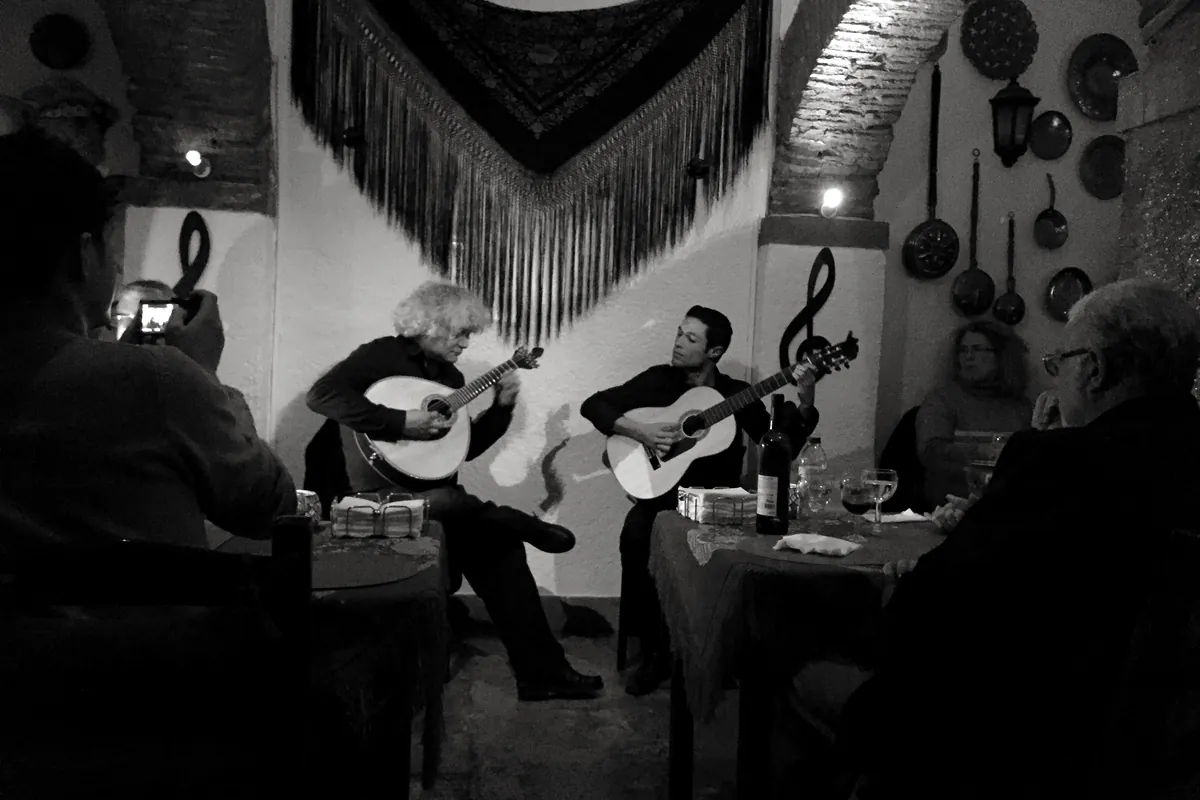
Book it if you have never heard fado and want to hear it live without giving up a whole evening. An hour is short enough to slot in before supper or after a day of walking, and the spoken introduction means you leave knowing what you listened to. Skip it if you want a long dinner with songs between courses, or if you are already a regular at fado houses and dislike anything framed for visitors. The rest of this guide is about which of those two people you are.
What you are actually buying
That list is the booking page's own, reduced to its parts. The listing adds that the venue is a project begun by friends who love the music. It also says you can choose between three rooms under the same name, so the date you pick decides where you sit. None of this is a promise about songs: programmes change from night to night, and no listing can tell you which voice you will hear.
- A live fado show in a small old-town room
- One glass of port wine
- An explanation of fado as part of Portuguese identity
- Nothing to eat, and no transport
Is fado a Lisbon thing?
Largely, yes, and you should know that before you book. Wikipedia traces fado to Lisbon in the 1820s and names two main varieties, linked to Lisbon and Coimbra. Porto is not on that short list. What Porto has is a visitor-facing evening that borrows the wider tradition, which is a fair thing to sell as long as it is described that way. If your trip includes Lisbon, hearing fado there as well gives you the version with deeper local roots; if it does not, an hour in Porto is a perfectly good way to meet the music.
Read next: Lisbon, Coimbra and Porto fado
The room and the seats
The room is small, and that decides most of what you will feel. The listing says the rooms have acoustics suited to the music, and in a small space you hear the strings, the singer's breath and the pauses between phrases at close range. The cost is that sight lines depend on when you arrive: the earlier you are, the more say you have over where to sit. Treat arriving early as part of the ticket. If the view matters, aim for the head of the queue rather than the last minute.
What to listen for
Fado is a form with habits you can learn to hear in an hour. Wikipedia lists rubato among fado's habits: a phrase ends, the accompaniment waits, and the voice lingers on one note for drama. It also mentions two-beat and waltz-like three-beat rhythms. Listen for those lingering notes, and for how the Portuguese guitar answers the voice with quick, ringing figures while the viola keeps the harmony steady underneath. If a spoken introduction names these things, you will hear them; if it does not, you can still spot them. Nobody expects you to follow the words.
One glass of port, no dinner
Port is sweet, fortified and strong: Wikipedia gives its usual strength as between 19 and 22 per cent alcohol, because a neutral grape spirit is added to stop fermentation. A single small glass therefore suits a one-hour sit better than a full drink would. What the ticket leaves out is food. Plan supper on either side, because arriving hungry and leaving hungry is the most common way to be disappointed by a short show.
Staged for visitors? A fair look
The listing promises an explanation of fado as part of Portuguese identity, and a regular of fado houses may hear that as staging. There is something to it: in a restaurant where fado is simply sung, nobody stops to explain the rubato or the guitar. But a show built for newcomers is not a lesser thing for being clear about its audience. If you want the music with context, this format gives it. If you want the music with no context at all, a Lisbon fado house will suit you better, and the next section explains who each version is for.
Choosing between the three rooms
The listing describes three old-town rooms run under one name: a cellar, a former workshop for making guitars, and the old pantry beneath a convent church. The calendar shows which room each date uses, and your confirmation repeats it. You may not get to choose, so check the room against your plans before you pay. All three are in central Porto and are presented as intimate spaces suited to the music, which is the promise to hold the venue to.
The old town around the room
UNESCO listed the historic centre of Porto in 1996 as a single site with the Luís I Bridge and a hilltop monastery across the river, and Wikipedia names the cathedral as the city's oldest surviving structure. The three rooms the listing describes are inside that old-town fabric, which is part of the appeal: you walk up stone streets to a cellar, a workshop or a convent pantry rather than into a purpose-built hall. Allow time to find the entrance by daylight if you can, since the lanes are steep and easy to misjudge in the dark.
Who it suits
First-time listeners, couples after something atmospheric, small groups wanting one memorable hour, and anyone who likes live acoustic music and would rather understand it than simply hear it. It also suits a day that is already full, since an hour leaves time for a river walk and a proper dinner.
Who this isn't for
People wanting a three-course dinner with a floor show; fado devotees who dislike introductions; anyone who needs to be sure of a particular view of the stage, since seating depends on arrival; and anyone expecting a particular singer or programme, which no listing can promise. If you need step-free access, the listing does not state what the rooms offer, so ask the provider through your booking first.
A first-timer's checklist
Most disappointment with short shows comes from mismatched expectations rather than the music itself. Treat this as a listening hour with a drink, not a night out in its own right, and plan the rest of your evening around it. Allow a few minutes to find the door, since old-town lanes are rarely signposted the way a theatre is.
- Check which of the three rooms your date uses
- Arrive early if you care where you sit
- Eat before or after, because nothing to eat is included
- Wear flat shoes for the old town's steep lanes
- Put the phone away once the first song starts
If you can only hear fado once
Then the best advice is to hear it in the place with the deepest roots, which Wikipedia says is Lisbon, or Coimbra for the university style. But a traveller whose route runs only through Porto still gets something real here: live musicians, a real instrument line-up and an explanation of what the music is for. The fair comparison is not between this and a perfect fado night, but between this and hearing no fado at all.
Booking, paying and the day itself
Pick the date in the calendar, choose your language, and either pay now or reserve and pay later. Your confirmation holds the start time, the room and the terms that apply to you. On the day, arrive early, eat elsewhere, and bring nothing that cannot sit on your lap. Afterwards the old town is a short, steep walk from the river, which makes a fine finish to the night.
Frequently asked questions
Is the show only in English?
The booking page lets you choose your language before paying. Pick yours on the calendar, and your confirmation repeats it.
Is fado sad?
Often, but not always. Wikipedia says fado is popularly thought mournful and tied to saudade, yet is also simply a song form that can be about anything.
Can I eat there?
The ticket does not include food. Treat the hour as a stop between meals.
Is it suitable for children?
The listing states no age rule. The hour is spent seated and listening in a small room, so it depends on the child.
Should I book ahead?
Yes. The room is small, so evenings fill, and the calendar shows what is open for your dates.
Is this the same as seeing fado in Lisbon?
No. Lisbon's tradition is older and broader. A Porto show draws on it, and an hour here is an introduction rather than a substitute.
Sources
- English Wikipedia article: Saudade (read 13 November 2026)
- English Wikipedia article: Porto (read 13 November 2026)
- English Wikipedia article: Fado de Coimbra (read 13 November 2026)
- English Wikipedia article: Port wine (read 13 November 2026)
- English Wikipedia article: Fado (read 13 November 2026)
- UNESCO World Heritage page for the Historic Centre of Oporto (read 13 November 2026)